PDL Talk Series
July 16, 2026
TIME: 12:00 noon to approximately 2:00 pm EDT
PLACE: Virtual - a zoom link will be emailed closer to the seminar
 TALK 1: Elaine Shi & Afonso Tinoco, Carnegie Mellon University
Oblivious RAM: from theory to large-scale deployment
In this talk, we will give a tutorial on Oblivious RAM (ORAM), and tell the story about how ORAM evolved from theory to large-scale real-world adoption. Specifically, we will describe the use case of Signal and the intended use case for Ethereum.
BIO: Elaine is a Professor with a joint appointment in CSD and ECE at Carnegie Mellon University. I am also an Adjunct Professor of Computer Science at the University of Maryland. My research interests include cryptography, security, mechanism design, algorithms, foundations of blockchains, and programming languages. I’m a co-founder of Oblivious Labs, Inc. My research on Oblivious RAM and differentially private algorithms have been adopted by Signal, Meta, and Google.
BIO: Afonso Tinoco is a 3rd year PhD student of Computer Science studying under Elaine Shi at CMU Portugal.
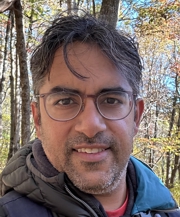 TALK 2: Vaibhav Arora, Salesforce
Salesforce Database: A Cloud-Native Multi-Tenant OLTP Database
Salesforce Database (SalesforceDB) is a multi-tenant relational database built by Salesforce to power its transactional workloads. Developing its own database allows Salesforce to innovate and integrate the application’s multi-tenancy into the database, creating new capabilities and improved operational and cost efficiencies. SalesforceDB is deployed in production across thousands of instances holding many petabytes of data.
The talk will describe the key architectural elements of Salesforce Database. Like many modern databases, SalesforceDB is cloud-native and decouples compute and storage. Its design reflects Salesforce-specific requirements: it natively supports multi-tenancy, employs a shared, immutable distributed storage system, and uses a tenant-clustered log-structured merge tree (LSM) for data access. In this talk, we will first introduce SDBStore, an immutable distributed storage system that stores SalesforceDB’s log as well as data files, supports multiple databases, and provides high availability including tolerance to availability zone (AZ) failures. It uses object storage to achieve high durability and supports dual log and data caches for low latency access. Then, we will detail SalesforceDB's multi-tenancy design and its novel LSM virtualization layer that facilitates tenant-level features that cannot be efficiently supported on existing database architectures. These include creating instant tenant copies, seamless tenant migration across database instances via metadata-only operations, and efficient tenant-level encryption. Finally, we will describe how SalesforceDB leverages its shared immutable LSM to horizontally scale with minimal coordination, with each node serving read and write requests for every record, eliminating the need for partitioning. This scale-out design allows SalesforceDB to support Salesforce's largest customers.
BIO: Vaibhav Arora is a Principal Member of Technical Staff at Salesforce and part of the Salesforce database team. His work focuses on database internals and distributed database systems. At Salesforce, he has worked on several problems related to multi-tenancy, LSMs, indexing, range filters, and other access-layer optimizations, as well as coordination challenges in distributed databases. Vaibhav received his Ph.D. in Computer Science from the University of California, Santa Barbara, where he worked with Professors Amr El Abbadi and Divyakant Agrawal.
CONTACTS
, PDL Co-Director
RMCIC 2208
, PDL Co-Director
(412) 268-3064
GHC 9109
Executive Director, Parallel Data Lab
(412) 268-5485
PDL Administrative Manager
(412) 268-6716